


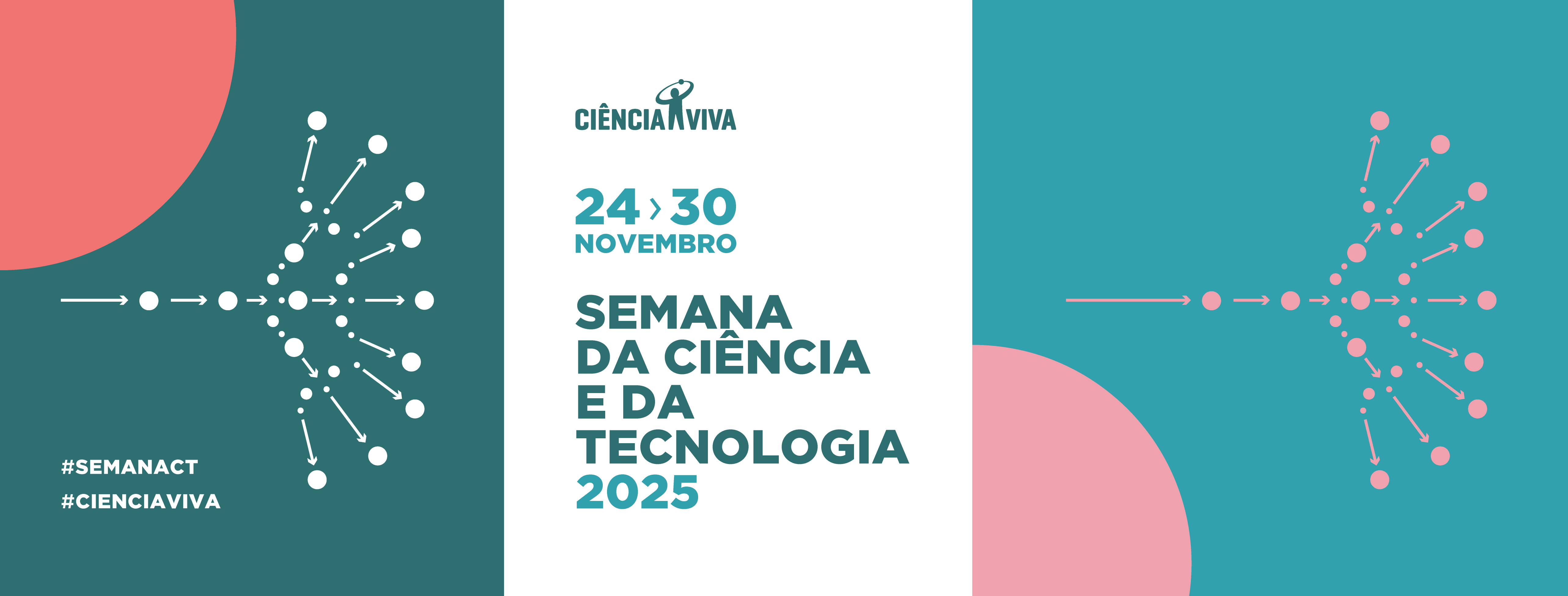
JusGov once again joined the remarkable initiative of Ciência Viva, the Science and Technology Week, held between 24 and 30 November 2025, through the organisation of several events, including, for the first time, two with the support of the Planetarium – Casa da Ciência de Braga (Centro Ciência Viva Braga).
This national initiative of Ciência Viva—the National Agency for Scientific and Technological Culture—aims to introduce scientists, their research and their contributions to the advancement of knowledge and the well-being of society. Every year, hundreds of science and technology outreach activities are organised throughout the country by scientific institutions, universities, schools, museums and science centres for the general public, especially younger audiences, who are thus given the opportunity to engage directly with the scientific community.
This year, the events organised by JusGov for the Science & Technology Week, under the scientific coordination of our researcher Gema Souto, covered several areas and were designed to further the Research Centre’s own mission of transferring knowledge to civil society, increasingly bringing it closer to students from secondary to higher education, while consolidating the participation of Senior and Junior JusGov Researchers in Science & Technology Week. The programme aimed to spark the interest of the general public—particularly young people—in research and scientific dissemination within the legal field.
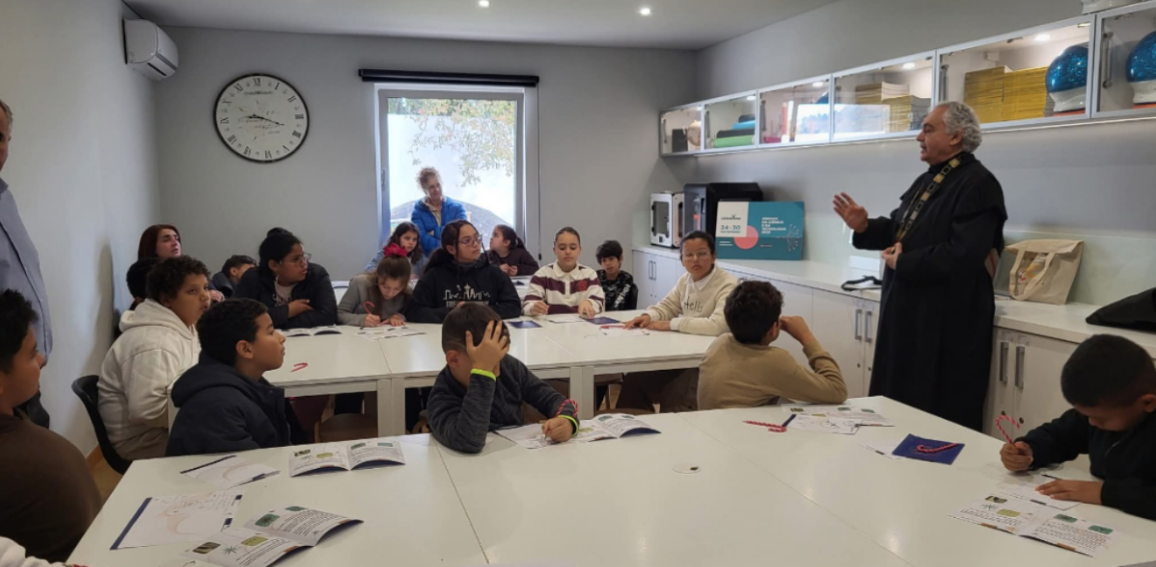
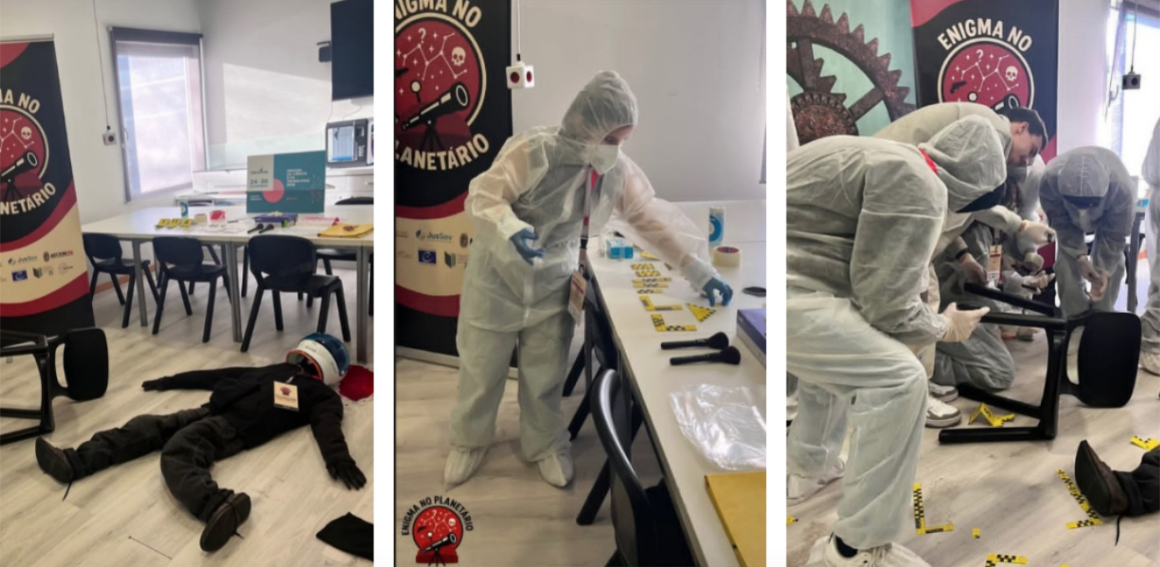
JusGov took part in this “celebration of science” with a programme that included, for the first time, two events supported by the Planetarium – Casa da Ciência de Braga (Centro Ciência Viva Braga), resulting from a recent three-party partnership agreement with AeCrimUM (the Criminology Students’ Association of the University of Minho): “Riddle at the Planetarium”, an interactive simulation designed for students in the third cycle of secondary education, centred on a case of simple homicide, with the practical application of concepts from Criminology, Forensic Sciences and the fundamental principles of criminal procedure, with special reference to the European Convention on Human Rights (ECHR) in the year of its 75th anniversary. The itinerary sparked the curiosity of these young “field researchers” (some of whom have already expressed a preference for pursuing Criminology studies following this experience!) as they moved through the different spaces of the Braga Planetarium, guided by Criminology student monitors of the School of Law of the University of Minho (EDUM); and “What Do You Think a Judge Is?”, an activity led by a Justice of the Supreme Court of Justice and a Senior JusGov Researcher, with the enthusiastic participation of fourth-year primary school pupils. This activity sought to introduce children to the role of the Judge in a State governed by the rule of law, the Judge’s function in society, and the principles of judicial independence and impartiality, with particular attention to the European Convention on Human Rights.
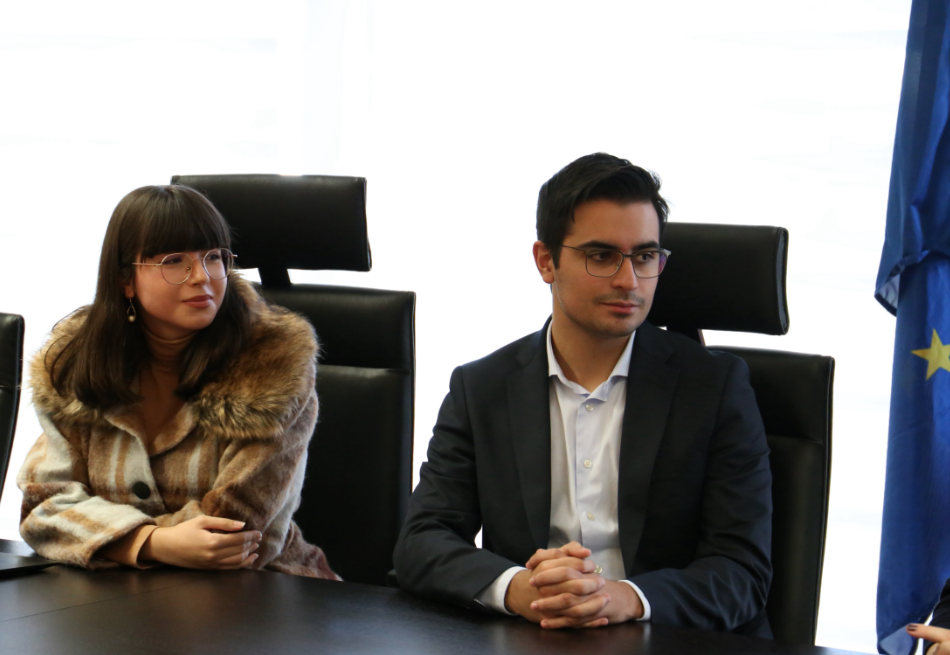
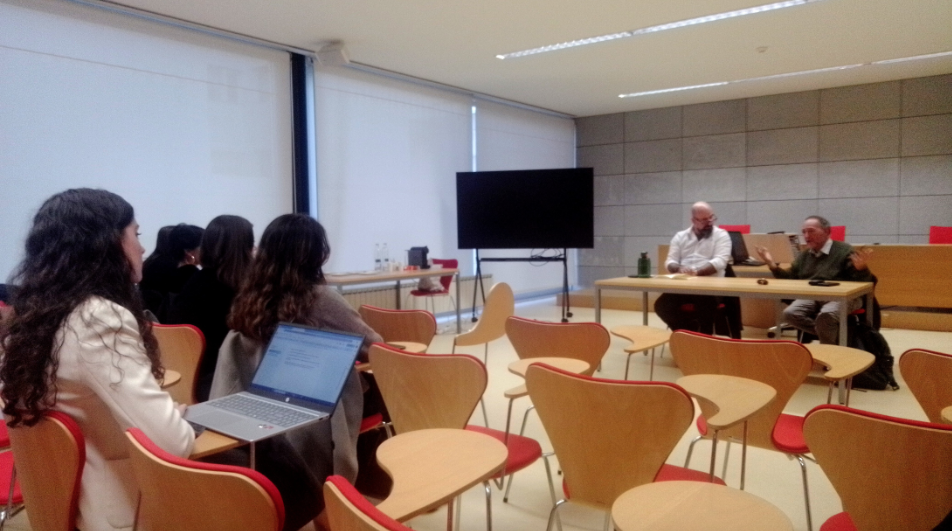
The Science & Technology Week 2025 at JusGov also included the now well-established event “Chatting About… Research in Justice and Governance with Junior Researchers”, in which Law students Mariana Pereira and Pedro Couto—junior researchers and finalists for the UMinho Prize for Initiation in Scientific Research 2025—shared their experiences and the projects they had developed in recent months. Their presentations offered a rigorous and highly topical approach to cybercrime and artificial intelligence, as well as to the environmental footprint of the Ecological Passport. Finally, JusGov Researchers and EDUM Professors Fernando Conde Monteiro and Ricardo Menna Barreto revisited the film “Minority Report” and provided the keys to a criminological and philosophical-legal perspective in the age of Artificial Intelligence, in a conversation with Law students in the format of a “Science Café”, which was very warmly received by those in attendance.
JusGov once again joined the remarkable initiative of Ciência Viva, the Science and Technology Week, held between 24 and 30 November 2025, through the organisation of several events, including, for the first time, two with the support of the Planetarium – Casa da Ciência de Braga (Centro Ciência Viva Braga).
This national initiative of Ciência Viva—the National Agency for Scientific and Technological Culture—aims to introduce scientists, their research and their contributions to the advancement of knowledge and the well-being of society. Every year, hundreds of science and technology outreach activities are organised throughout the country by scientific institutions, universities, schools, museums and science centres for the general public, especially younger audiences, who are thus given the opportunity to engage directly with the scientific community.
This year, the events organised by JusGov for the Science & Technology Week, under the scientific coordination of our researcher Gema Souto, covered several areas and were designed to further the Research Centre’s own mission of transferring knowledge to civil society, increasingly bringing it closer to students from secondary to higher education, while consolidating the participation of Senior and Junior JusGov Researchers in Science & Technology Week. The programme aimed to spark the interest of the general public—particularly young people—in research and scientific dissemination within the legal field.
JusGov took part in this “celebration of science” with a programme that included, for the first time, two events supported by the Planetarium – Casa da Ciência de Braga (Centro Ciência Viva Braga), resulting from a recent three-party partnership agreement with AeCrimUM (the Criminology Students’ Association of the University of Minho): “Riddle at the Planetarium”, an interactive simulation designed for students in the third cycle of secondary education, centred on a case of simple homicide, with the practical application of concepts from Criminology, Forensic Sciences and the fundamental principles of criminal procedure, with special reference to the European Convention on Human Rights (ECHR) in the year of its 75th anniversary. The itinerary sparked the curiosity of these young “field researchers” (some of whom have already expressed a preference for pursuing Criminology studies following this experience!) as they moved through the different spaces of the Braga Planetarium, guided by Criminology student monitors of the School of Law of the University of Minho (EDUM); and “What Do You Think a Judge Is?”, an activity led by a Justice of the Supreme Court of Justice and a Senior JusGov Researcher, with the enthusiastic participation of fourth-year primary school pupils. This activity sought to introduce children to the role of the Judge in a State governed by the rule of law, the Judge’s function in society, and the principles of judicial independence and impartiality, with particular attention to the European Convention on Human Rights.
The Science & Technology Week 2025 at JusGov also included the now well-established event “Chatting About… Research in Justice and Governance with Junior Researchers”, in which Law students Mariana Pereira and Pedro Couto—junior researchers and finalists for the UMinho Prize for Initiation in Scientific Research 2025—shared their experiences and the projects they had developed in recent months. Their presentations offered a rigorous and highly topical approach to cybercrime and artificial intelligence, as well as to the environmental footprint of the Ecological Passport. Finally, JusGov Researchers and EDUM Professors Fernando Conde Monteiro and Ricardo Menna Barreto revisited the film “Minority Report” and provided the keys to a criminological and philosophical-legal perspective in the age of Artificial Intelligence, in a conversation with Law students in the format of a “Science Café”, which was very warmly received by those in attendance.