


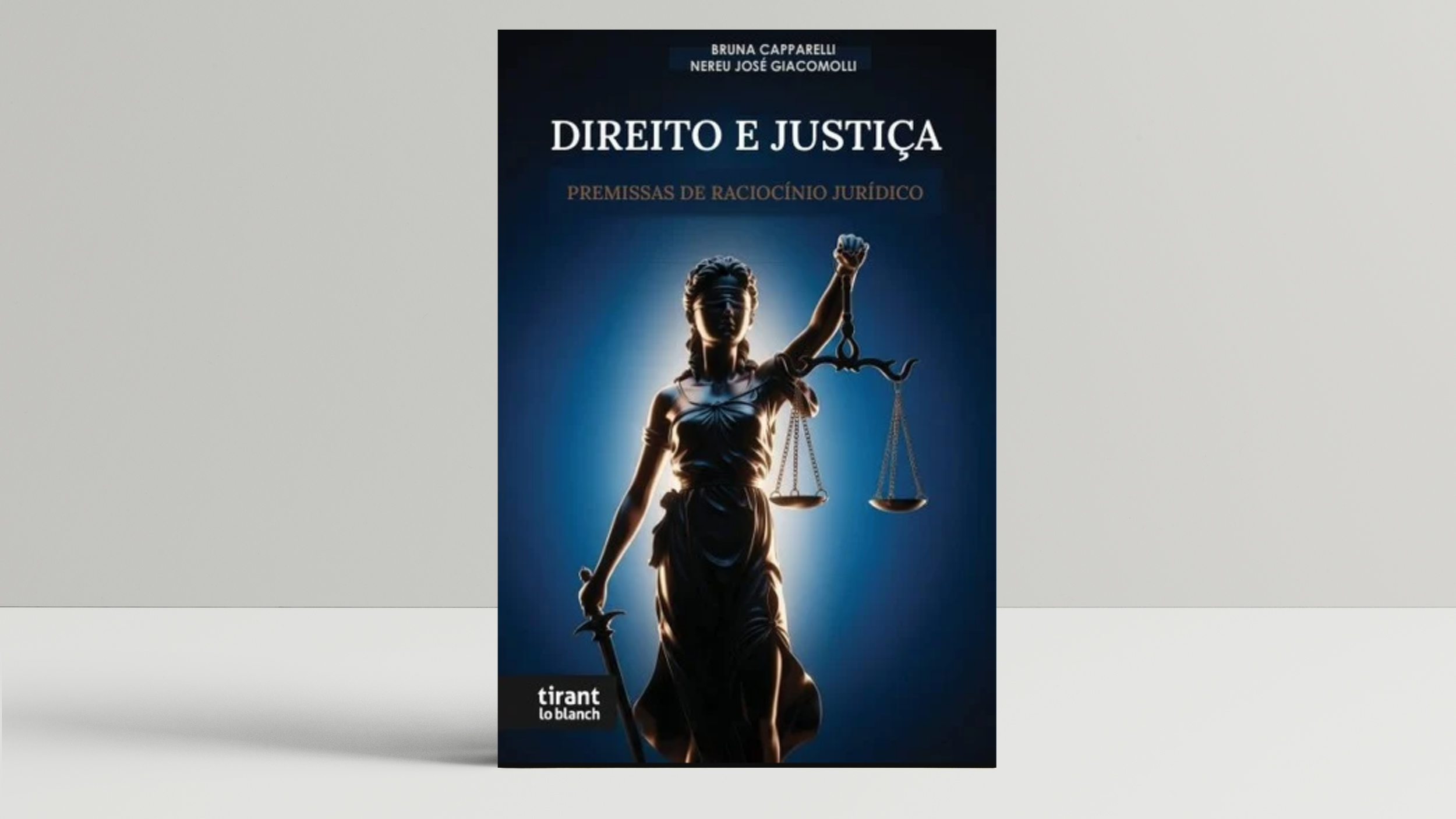
This book seeks to reconstruct the relationship between law and justice, which contemporary legal culture often presents as separate or even contradictory. The authors demonstrate that this separation is illusory and produces dangerous effects: a law reduced to mere form and detached from values is incapable of addressing the real demands of social life. The work shows that all legal experience arises from a horizon of shared values, expressed in constitutional principles, which serve as the connecting link between normativity and justice. Interpretations based on a mechanistic-logical framework are critically examined. Contemporary experience—characterised by the constitutionalisation of law, the centrality of fundamental rights, and the creative role of the judiciary—demonstrates that law is a practical science, grounded in historicity, reasonableness, and the pursuit of democratically acceptable decisions; it does not merely describe the world as it is, but acts upon it, producing effects, choices, and values. The judge does not simply apply rules: they interpret principles, engage with the lived reality, and construct and reconstruct meaning. In doing so, they guide actions, resolve conflicts and cases, and deliberate on what ought or ought not to be done. Reasonableness emerges as the decisive criterion linking legal form and ethical content, allowing inadequate laws to be corrected and the normative text harmonised with democratic values. Thus, law and justice are two sides of the same coin: it is impossible to preserve unjust laws without reducing them to a mere exercise of power. The book concludes that justice is not a fixed concept, but an ever-unfinished historical experience. Yet, even without an absolute definition, it guides the law, prevents its formalistic closure, and requires that norms emerge from the concreteness of lived reality. The Constitution, as an expression of fundamental values, does not prescribe rigid paths, but rather indicates directions through which the law may, as far as possible, achieve just outcomes.
Publisher Tirant lo Blanch
Authors Bruna Capparelli & Nereu José Giacomolli
Year 2025
Available to buy online.
This book seeks to reconstruct the relationship between law and justice, which contemporary legal culture often presents as separate or even contradictory. The authors demonstrate that this separation is illusory and produces dangerous effects: a law reduced to mere form and detached from values is incapable of addressing the real demands of social life. The work shows that all legal experience arises from a horizon of shared values, expressed in constitutional principles, which serve as the connecting link between normativity and justice. Interpretations based on a mechanistic-logical framework are critically examined. Contemporary experience—characterised by the constitutionalisation of law, the centrality of fundamental rights, and the creative role of the judiciary—demonstrates that law is a practical science, grounded in historicity, reasonableness, and the pursuit of democratically acceptable decisions; it does not merely describe the world as it is, but acts upon it, producing effects, choices, and values. The judge does not simply apply rules: they interpret principles, engage with the lived reality, and construct and reconstruct meaning. In doing so, they guide actions, resolve conflicts and cases, and deliberate on what ought or ought not to be done. Reasonableness emerges as the decisive criterion linking legal form and ethical content, allowing inadequate laws to be corrected and the normative text harmonised with democratic values. Thus, law and justice are two sides of the same coin: it is impossible to preserve unjust laws without reducing them to a mere exercise of power. The book concludes that justice is not a fixed concept, but an ever-unfinished historical experience. Yet, even without an absolute definition, it guides the law, prevents its formalistic closure, and requires that norms emerge from the concreteness of lived reality. The Constitution, as an expression of fundamental values, does not prescribe rigid paths, but rather indicates directions through which the law may, as far as possible, achieve just outcomes.
Publisher Tirant lo Blanch
Authors Bruna Capparelli & Nereu José Giacomolli
Year 2025
Available to buy online.